
Uncategorized
12 Classic American Muscle Car Models to Know
Jul
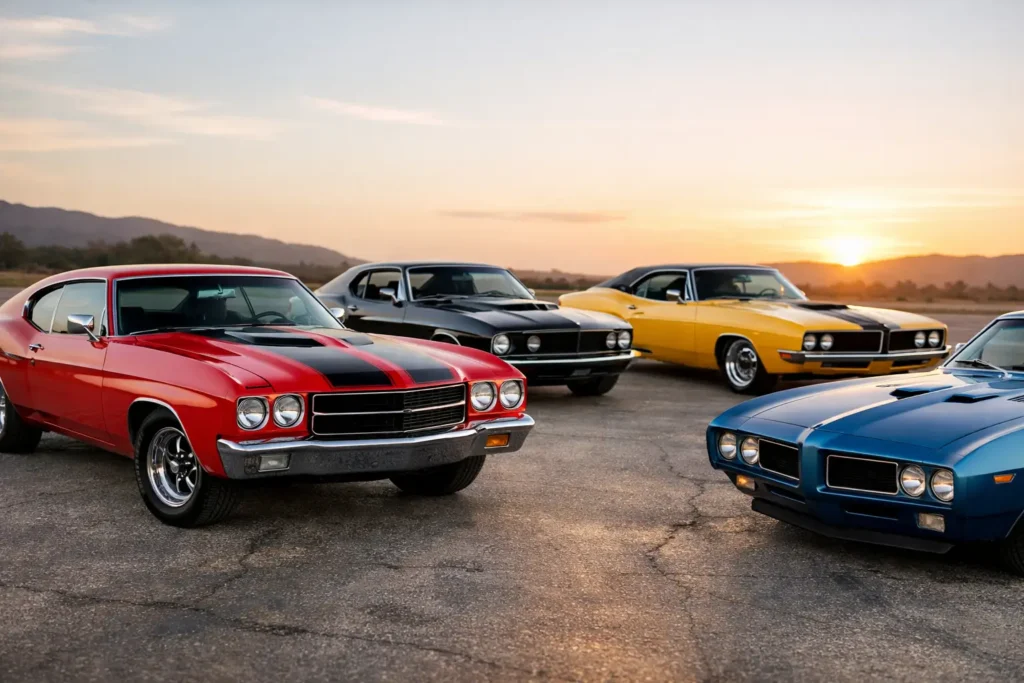
A 1970 Chevelle SS in deep red, a black 1968 Charger R/T, or a bright Grabber Blue Mustang can stop a collector in their tracks long before the package comes off the shelf. The best classic American muscle car models carry more than big engines and bold paint. They represent a brief, wild period when Detroit turned family coupes into quarter-mile legends – and that personality translates perfectly to diecast collecting.
For collectors, the details matter. A hood stripe, factory wheel choice, engine callout, spoiler, or exact model year can separate an interesting casting from the one you have been hunting for. These 12 cars are essential names to know, whether you collect 1/64 favorites, premium 1/24 replicas, or display-ready 1/18 models.
Why Classic American Muscle Car Models Still Matter
Muscle cars were built around a simple formula: put a large-displacement V8 in a relatively affordable American coupe, then give it the gearing, suspension, and attitude to make the most of it. The formula was not identical across every brand. Some cars were stripped-down drag racers, some were high-speed highway machines, and some borrowed pony-car proportions while delivering genuine big-block power.
That variety is why the category remains so satisfying to collect. A 1964 GTO, a 1969 Boss 429, and a 1970 Hemi ‘Cuda all belong in the conversation, but they have very different stories, body styles, and collector appeal. Choosing by era, manufacturer, engine family, or colorway creates a collection with real character rather than a row of cars that all look alike.
12 Classic American Muscle Car Models for Collectors
1964 Pontiac GTO
The GTO is often credited with lighting the fuse on the muscle car movement. Pontiac placed a 389 V8 into the mid-size LeMans platform and offered the kind of performance buyers had been waiting for. For a diecast display, the first-year GTO brings early muscle style: stacked headlights, clean body lines, and less of the graphic-heavy look that defined the 1970s.
1967 Chevrolet Camaro SS
Chevrolet introduced the Camaro to challenge the Mustang, but the SS gave the car a more serious performance identity. Big-block versions are especially desirable because the compact body and muscular stance look right in every scale. Watch for year-specific details on grille trim, badging, wheels, and hood treatment. A 1967 casting should not be treated as interchangeable with a 1969 Camaro.
1968 Dodge Charger R/T
Few muscle cars have a silhouette as recognizable as the second-generation Charger. The recessed rear window, broad rear fenders, and full-width grille make the 1968 R/T a centerpiece car. Factory 440 Magnum examples are iconic, while Hemi versions bring extra collector heat. Black is the movie-famous choice, but period-correct red, green, and blue finishes can make a display feel less predictable.
1969 Ford Mustang Boss 429
Some enthusiasts classify the Mustang as a pony car first, and that is fair. The Boss 429, however, belongs in any muscle car conversation. Its huge NASCAR-inspired engine required a specially modified engine bay, and the resulting car has an unmistakable purpose-built look. In miniature, look for the wide front fenders, hood scoop, and correct period wheels that distinguish a Boss from a standard Mustang.
1969 Mercury Cougar Eliminator
The Cougar Eliminator offered muscle performance with a more upscale Mercury identity. It shared much of its foundation with the Mustang but wore its own long-hood, hidden-headlamp style. Bright colors, stripes, spoilers, and blacked-out exterior accents make the Eliminator one of the most display-friendly Ford-family castings. It is also a smart choice for collectors who want something less common than another Mustang.
1969 AMC AMX
The AMC AMX proves that muscle car history was not limited to the Big Three. With a short two-seat body and available V8 power, it had a different mission from the larger Detroit coupes. Its proportions are compact and almost sports-car-like, which gives a muscle car shelf welcome variety. A well-detailed AMX casting also tells visitors that the collection goes beyond the obvious favorites.
1970 Chevrolet Chevelle SS 454
The 1970 Chevelle SS 454 is the big-block bruiser many collectors picture first. Its cowl-induction hood, squared-off stance, and SS badging have made it a lasting favorite in both premium replicas and mainstream diecast lines. LS6-equipped cars are the headline version, but any accurately finished SS 454 has presence. A factory-style stripe package can be just as important visually as the engine designation.
1970 Buick GSX
Buick brought luxury-brand polish to serious performance with the GSX. The Stage 1 version, in particular, has earned a reputation for huge torque and surprising speed. Saturn Yellow with black graphics is the instantly recognizable combination, though Apollo White is equally authentic and often looks cleaner in a display. The GSX is ideal for collectors building a 1970-only lineup across several manufacturers.
1970 Oldsmobile 442 W-30
The 442 W-30 was Oldsmobile’s answer for buyers who wanted a mid-size muscle car with a distinctive identity. Functional-looking hood scoops, stripes, and aggressive wheels give it plenty of shelf appeal without copying the Chevelle formula. A proper W-30 model deserves attention to its hood treatment and graphics, because those features make the trim readable at a glance.
1970 Dodge Challenger R/T
Long, low, and unmistakably Mopar, the Challenger R/T arrived late in the original muscle car era but made an immediate impression. It could be ordered with engines ranging from strong to outrageous, including the 440 Six Pack and 426 Hemi. Plum Crazy, Go Mango, and Sublime are collector favorites for good reason. Color is a major part of the Challenger experience, not an afterthought.
1970 Plymouth Hemi ‘Cuda
The Hemi ‘Cuda sits near the top of the muscle car hierarchy. Plymouth’s Barracuda-based coupe had sharp lines, a wide stance, and available high-impact colors that still look fantastic in scale. The Hemi version is the dream specification, but a 440 Six Barrel or 340 ‘Cuda can be just as rewarding when the casting captures the shaker hood, side stripes, and correct wheels.
1970 Plymouth Road Runner
The Road Runner was designed around accessible performance and a sense of fun. Its cartoon-bird branding did not make it less serious at the drag strip, especially when fitted with the 440 Six Barrel or Hemi. The 1970 redesign gave it a more dramatic front end and strong body contours. This is a great model for collectors who prefer raw, blue-collar muscle over luxury-trim performance cars.
How to Build a Better Muscle Car Diecast Collection
Start with a lane that makes sense for your display. A 1968-1970 Mopar row can focus on Chargers, Challengers, ‘Cudas, and Road Runners in high-impact colors. A GM collection can compare the GTO, Chevelle, 442, GSX, and Camaro across body sizes and divisions. Or build around one theme, such as factory drag-strip specials, big-block cars, or black-with-stripes street machines.
Scale deserves the same attention as the car itself. A 1/18 model has the room for opening panels, detailed engines, interior trim, and underhood hardware, making it a natural focal point. A 1/24 collection can cover more nameplates without requiring a huge case. In 1/64, the emphasis often shifts to casting selection, wheel design, paint quality, and whether the release belongs to a recognized series.
Authenticity can be a trade-off. Some collectors want factory-correct colors and stock wheels; others prefer period race liveries, drag versions, or custom builds. Neither approach is wrong, but mixing them intentionally makes the display stronger. A row of showroom-stock cars tells one story. Pairing them with a gasser, pro street build, or race-prepped version tells another.
Before adding a model, check the exact year, trim, color, manufacturer, and scale. Diecast Moto collectors know that a small difference in a product name can signal a completely different release. Keep a wishlist for missing castings, especially if you are completing a brand, model-year, or color theme.
The most rewarding muscle car collection is not necessarily the one with the rarest pieces. It is the one that makes you pause at the display and remember why each casting earned its place.
