
Uncategorized
Ford Mustang Diecast Collectibles Worth Finding
Jul
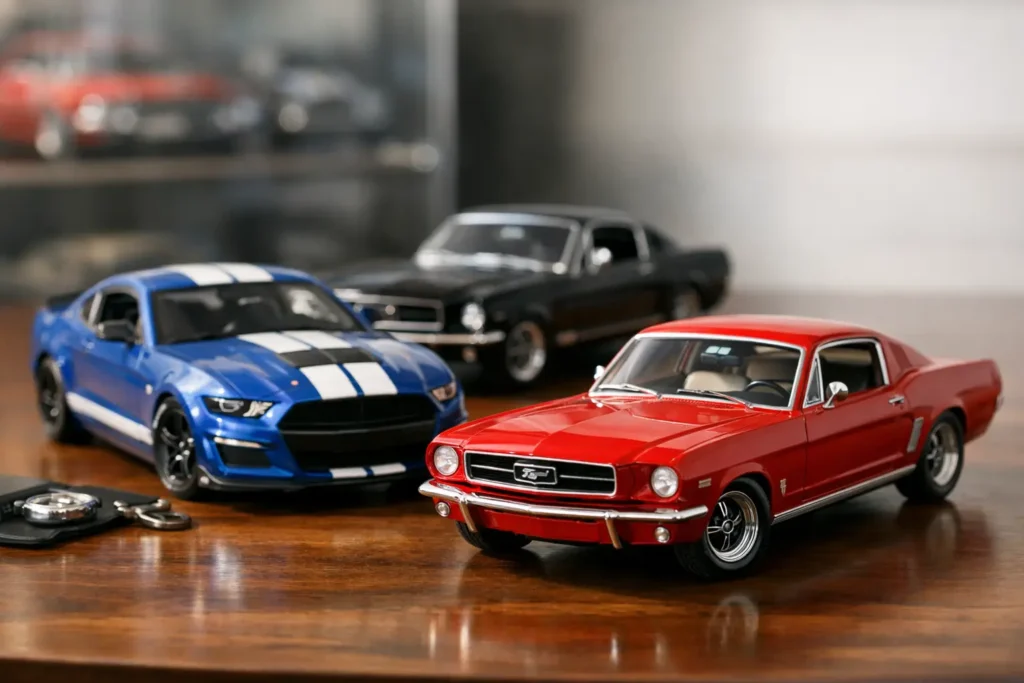
Ford Mustang diecast collectibles earn their shelf space because the real car has never stood still. A 1965 Mustang coupe, a Boss 302 Trans Am racer, a Fox Body notchback, and a modern Shelby GT500 may share a badge, but they represent completely different eras of American performance. That variety gives collectors plenty of ways to build a focused Mustang lineup instead of simply filling a display with similar-looking cars.
For some collectors, the goal is to own every generation. Others hunt a favorite body style, a specific factory color, or a racing livery tied to a driver and championship. Gift buyers may just want the Mustang that looks most like a family member’s first car. The best choice depends on what makes the Mustang matter to you – and on the level of detail you want in miniature.
Why Ford Mustang Diecast Collectibles Keep Growing
The Mustang is one of the few nameplates that works equally well as a vintage automobile, a race car, a drag-strip machine, a custom build, and a modern supercharged performance car. That gives manufacturers a deep catalog of subjects to reproduce. It also means a Mustang collection can grow naturally over time without becoming repetitive.
Early Mustangs remain a starting point for many collectors. The 1964 1/2 and 1965 models capture the original pony-car formula: long hood, short rear deck, bright trim, and simple, recognizable proportions. Fastbacks usually command the most attention because of their roofline and racing connection, but a properly detailed coupe or convertible has its own appeal. Trim level matters here. A standard coupe, GT, GT350, GT500, and Shelby tribute model can look close at a glance while representing very different cars.
Then come the performance legends. Boss 302, Boss 429, Mach 1, Cobra Jet, Saleen, SVT Cobra, Shelby GT350, GT500, and Dark Horse releases give a collection personality. A collector building around motorsport might prioritize Trans Am Boss 302s, IMSA cars, NASCAR stock cars, or modern road-racing Mustangs. A drag-racing fan may prefer Super Stock-era Cobra Jets, Pro Stock-inspired customs, and Hot Wheels drag-strip castings.
Limited production can make a release more exciting, but rarity alone should not decide every purchase. A model that connects to your favorite year, color, or race team often stays meaningful longer than a scarce casting bought only because it was hard to find.
Start With the Scale That Fits Your Collection
Scale is one of the first details to check before adding a Mustang to the cart. It affects display space, price, realism, and how well a model fits with what you already collect.
A 1/18 scale Mustang is usually the display centerpiece. At this size, collectors can appreciate the stance, interior appointments, badging, wheels, brake detail, and body lines that separate a 1969 Boss 429 from a 1970 Mach 1. Premium versions may include opening doors, hood, and trunk, detailed engines, carpeted interiors, working steering, and carefully replicated stripes. The trade-off is space. A growing row of 1/18 models needs a proper case or shelf quickly.
A 1/24 scale model offers a strong middle ground. It gives you a substantial replica without demanding the room of a 1/18 collection. These models are especially useful for collectors who want to show several generations together, such as a first-generation fastback beside a 1980s Fox Body and a current GT. Depending on the manufacturer and release, expect different levels of opening features and engine detail.
Smaller diecast Mustangs, including 1/64 scale releases, make it easier to chase variations, themed series, and track-ready collections. Hot Wheels castings are a major part of that appeal. A Mustang from Car Culture, HW Drag Strip, or another themed release can deliver a memorable livery, custom wheel choice, or period-correct look in a small footprint. These are ideal for collectors who enjoy the hunt, want to organize by series, or have limited display room.
There is no wrong scale, but consistency helps. If your goal is a clean generational display, matching scales make body changes easier to compare. If you collect by subject rather than presentation, mixing scales can be more fun. A large 1/18 Shelby may deserve center stage while a row of 1/64 racing Mustangs tells the rest of the story around it.
Details That Separate a Great Mustang Model
The best Mustang replicas get the details right before they add extra features. Start with the basics: model year, body style, trim, paint color, wheels, stripes, and ride height. Mustang styling changed often, sometimes from one year to the next. The grille, taillights, side scoops, hood treatment, and badging can be the difference between a model that feels accurate and one that feels generic.
Color is especially important with this car. Wimbledon White with blue stripes immediately signals an early Shelby. Grabber Blue, Calypso Coral, Acapulco Blue, Highland Green, Competition Orange, and Black Jade each carry a distinct period identity. On newer models, colors such as Race Red, Velocity Blue, Grabber Lime, and Rapid Red can determine whether a diecast matches the exact car a collector remembers.
For racing pieces, verify the full identification instead of relying on the Mustang name alone. The car number, sponsor markings, driver association, wheel type, class, and livery era all matter. A Trans Am-inspired Boss 302 with period sponsor graphics tells a much more specific story than a standard street version. The same goes for movie-inspired or custom releases: they are often valued for a particular visual treatment, not strict factory originality.
Manufacturer differences matter, too. One brand may focus on premium opening parts and finely finished interiors, while another excels at affordable licensed castings, custom executions, or collectible series packaging. Read product specifications closely. Exact model year, scale, colorway, edition name, and manufacturer are more useful than broad labels like classic Mustang or racing car.
Build a Mustang Collection With a Clear Theme
A theme gives even a modest collection the feeling of purpose. You do not need every Mustang ever produced. In fact, a narrower focus often makes finding the next piece more satisfying.
A generational collection is a natural choice. Pick one representative model from each major era, beginning with the 1960s original and moving through the 1970s, Fox Body years, SN95, S197, S550, and current S650 generation. The result shows how Ford changed the Mustang while keeping its core proportions and performance attitude recognizable.
A Shelby and Ford Performance theme is another strong route. This can include GT350, GT500, Cobra, Boss, Mach 1, and Dark Horse models, with room for both vintage and current releases. If road racing is your priority, build around Mustangs with race numbers, driver names, and track-focused liveries. If street machines are your thing, mix factory performance cars with lowered customs, wide-body builds, and drag-strip versions.
Packaging deserves a quick decision, too. Carded 1/64 pieces can look great displayed in their original packaging, especially when the card art belongs to a recognizable series. Loose models take up less visual space and let you enjoy the casting from every angle. For premium scales, original boxes are worth keeping even if the model stays on display. They help with storage, identification, and future resale if your collecting plans change.
Smart Buying Habits for Mustang Collectors
Before purchasing, confirm the details that cannot be changed later: scale, model year, trim, color, manufacturer, and whether the release is a standard edition or limited production piece. Product photos help, but the specifications should guide the decision. A 1967 GT500 and a 1968 GT500 KR are not interchangeable, and a 1970 Boss 302 differs from its 1969 counterpart in ways serious collectors notice.
Condition should match your goals. Mint packaging may matter most for sealed-series collectors. A display-first buyer may be perfectly happy with an opened premium model if the paint, mirrors, wheels, windows, and moving parts are clean. For older releases, inspect common trouble spots such as paint rash, loose tires, warped cards, cracked blisters, missing antennas, and damaged decals.
It also helps to keep a simple want list. Record the exact Mustang, year, scale, color, manufacturer, and series you are after. This prevents accidental duplicates and keeps impulse buys from taking over the budget. At Diecast Moto, collector-focused product details make it easier to compare releases by those specifics rather than guessing from a thumbnail alone.
A Mustang shelf does not need to be complete to look impressive. Start with the version that makes you stop scrolling: the fastback in the right color, the Shelby with the right stripes, or the race car tied to a favorite era. One well-chosen model is a better foundation than five forgettable placeholders.
