
Uncategorized
Ferrari Diecast Models Worth Adding to Your Shelf
Jul
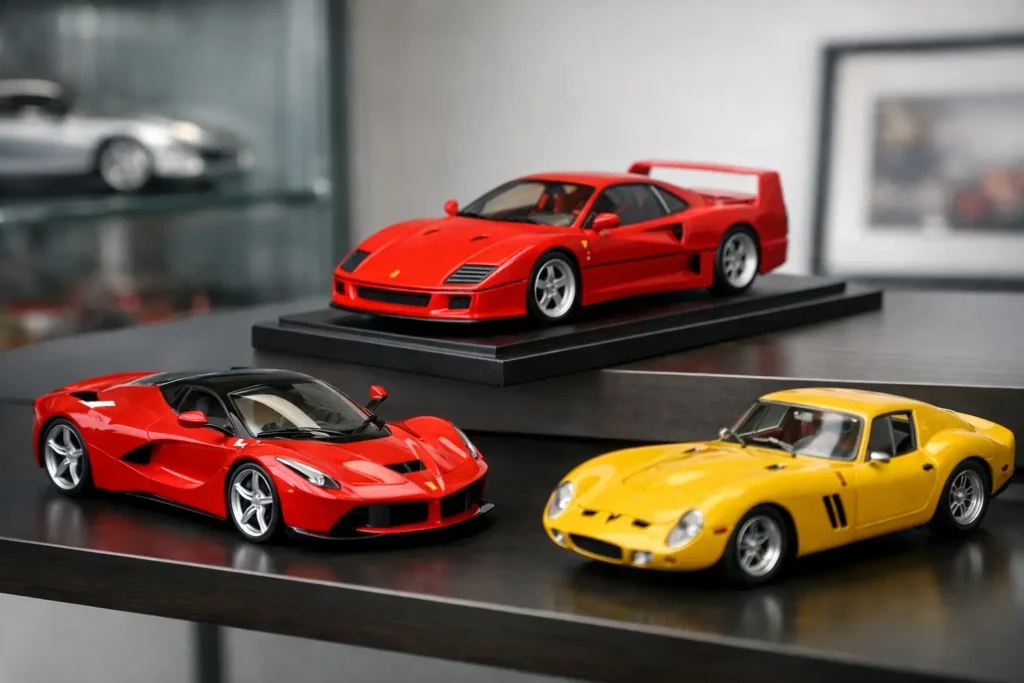
A Ferrari on the shelf should do more than wear a famous badge. The best Ferrari diecast models capture the proportions, paint, wheels, cockpit, and attitude that made the full-size car memorable in the first place. Whether you are drawn to a red 250 GTO, a Formula 1 machine in period livery, or a modern 488 Pista, choosing the right replica comes down to more than simply picking the most recognizable car.
For collectors, Ferrari offers a rare amount of variety. The marque’s history moves from coachbuilt classics and endurance racers to V12 grand tourers, mid-engine supercars, and championship-winning single-seaters. That gives a focused Ferrari collection room to grow without becoming repetitive.
What Makes Ferrari Diecast Models Collectible?
Ferrari is one of those names that works at almost every level of the hobby. A casual buyer sees a striking sports car in an iconic color. A longtime collector sees a particular year, body style, race number, driver pairing, trim, and manufacturer release. Both approaches are valid, but it helps to decide what you want your collection to say.
A road-car collection can follow Ferrari’s design evolution. You might begin with the elegant 1960s 250 series, move through the wedge-shaped 1970s and 1980s cars, then add milestones such as the F40, F50, Enzo, LaFerrari, 458 Italia, and Daytona SP3. The appeal is visual as much as historical: these cars show how Ferrari styling changed while keeping its low, purposeful stance.
Racing replicas tell a different story. A Le Mans entry, a Ferrari Challenge car, or a Formula 1 release comes with context built into the livery. Sponsor markings, number panels, tire branding, driver names, and race-specific details can make one version of a casting far more interesting than another. For motorsport fans, the exact event or season is often the deciding factor.
Limited production can add interest, especially when a release has a distinctive colorway, special packaging, or a short run. Still, limited does not automatically mean essential. A model that fits your theme and makes you want to look at it is usually a better buy than a numbered piece with no connection to the rest of your shelf.
Choosing Ferrari Diecast Models by Scale
Scale is the first practical choice because it determines how much detail you can expect, how much space the model needs, and how it will look next to the rest of your collection. Mixing scales is completely fine, but it works best when each scale has its own display area or purpose.
1/18 scale for centerpiece detail
A 1/18 Ferrari is large enough to feel like a display piece rather than a small accent. At this size, collectors can often appreciate separate grille pieces, detailed brake rotors, textured interiors, accurate wheel designs, and opening doors, hoods, or engine covers when the manufacturer includes them. A 1/18 model is an excellent choice for an F40, 250 GTO, Testarossa, or race car with a livery worth studying up close.
The trade-off is shelf space. A row of 1/18 cars fills a case quickly, and boxed examples need even more storage. If you collect several marques or vehicle categories, reserve this scale for the cars that truly deserve centerpiece status.
1/24 scale for a balanced collection
At 1/24, Ferrari replicas offer a useful middle ground. They are large enough to show body lines and cabin detail while remaining easier to organize in groups. This scale works especially well for collectors building a timeline of road cars or assembling several colors and variants of one model.
Not every 1/24 release will have the same opening features or material mix, so read the product specifications rather than assuming one manufacturer’s approach applies to another. A sealed-body model may still have crisp proportions and excellent paint, while an opening model may appeal more to collectors who enjoy inspecting engines and interiors.
Smaller scales for variety and race grids
Smaller Ferrari diecasts make it possible to collect broadly without turning every shelf into a parking garage. They are a smart option for assembling generations of vehicles, recreating a racing field, or adding a few favorites to a desk display. Their details are necessarily simplified, but a strong casting, clean tampo work, and correct wheels can still give a small model plenty of presence.
For a collector who likes both premium replicas and everyday finds, a mixed approach often works best: use 1/18 or 1/24 for landmark cars, then let smaller scales cover race liveries, unusual variants, and fun additions.
Road Cars, Race Cars, and the Details That Matter
Before buying, look beyond the model name. Ferrari has produced many cars with closely related versions, and diecast listings can distinguish them by model year, body configuration, paint color, wheel style, or competition livery. Those details are not filler. They help you avoid buying a near-duplicate when you were actually looking for a specific version.
Color is a good example. Rosso Corsa is the expected Ferrari choice, and a red Ferrari will always look right in a collection. But black, silver, yellow, blue, white, and historic racing colors can reveal bodywork that red sometimes hides. If you already own several red cars, a darker 812 Superfast or a yellow 296 GTB can make the display feel more deliberate.
For race cars, accuracy matters even more. Check the number, team markings, driver association, and year. A Formula 1 Ferrari may share a broad silhouette with a car from the prior season, yet have meaningful differences in wing shape, sponsor treatment, or championship connection. Endurance racing replicas deserve the same attention, particularly when a model represents a specific Le Mans or Daytona entry.
Look Closely at Construction and Finish
A great diecast does not need every moving panel to be satisfying, but it should look intentional from every angle. Start with the stance. The wheels should sit naturally in the arches, the ride height should suit the real vehicle, and the front and rear proportions should not feel distorted. Ferrari designs are especially sensitive to shape, so a clean silhouette is often more valuable than an overloaded feature list.
Paint quality is another key factor. Look for even coverage, clean separation between painted surfaces and trim, and decals or printed graphics that sit straight. Fine details such as headlights, taillights, exhaust tips, mirrors, brake calipers, and badging can separate a good shelf model from a great one.
Interior detail depends heavily on scale and price point. In larger replicas, details such as seat shapes, steering wheels, gauges, harnesses, and dashboard layouts add a lot to the experience. In smaller models, focus on the overall effect. A neatly finished cockpit behind clear windows can be more convincing than tiny details that are poorly applied.
Manufacturer matters because every maker has its own strengths. Some specialize in premium construction and opening features, while others excel at affordable castings, racing subjects, or compact scales. Rather than buying only by brand, compare the specific release. The best choice depends on whether you value display detail, historical subject matter, durability, or the chance to complete a series.
Packaging, Condition, and Long-Term Display
Collectors who keep models boxed should pay attention to packaging condition, especially with limited releases or gift purchases. Corners, window panels, blister cards, inserts, and factory seals can matter to buyers who treat packaging as part of the collectible. For an unboxed display collection, the car itself should remain the priority.
If you display your Ferrari models, protect them from direct sunlight, dust, humidity, and frequent handling. Sunlight can fade paint and printed graphics over time. A display case keeps dust off delicate mirrors and spoilers, while a little extra space between models prevents accidental paint rub. Keep original boxes when possible, even if you prefer an open display. They make moving, storing, and organizing the collection much easier.
Gift buyers can make the choice simpler by starting with the recipient’s favorite Ferrari era. An F40 suits many 1980s supercar fans, a 250 GTO has classic appeal, and a current Formula 1 model is a natural pick for a racing follower. When you know their preferred scale or display style, that is even better. A precise match beats a random expensive model every time.
A Ferrari collection does not need to begin with the rarest release or follow someone else’s checklist. Start with the car you would stop to admire in a parking lot, at a race, or on the cover of an old magazine. Then give it the scale, detail, and shelf space it deserves. Diecast Moto makes it easier to keep that search focused on the exact year, color, series, and Ferrari casting you want to bring home.
