
Uncategorized
8 Diecast Display Examples That Look Collection-Ready
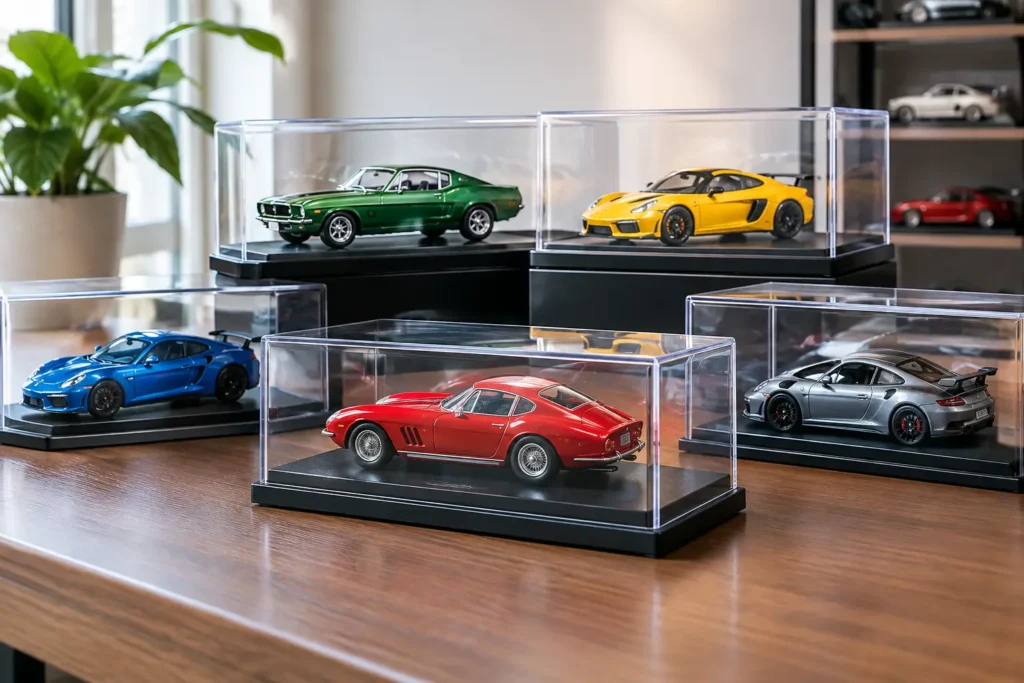
Oct
A great diecast collection can disappear into storage totes, blister-card piles, and crowded shelves faster than most collectors expect. The best diecast display examples do more than show off favorite castings. They make it easy to enjoy exact model years, special liveries, premium paint, detailed interiors, and hard-earned series completions every day.
The right setup depends on what you collect. A wall case that makes a Hot Wheels Car Culture lineup pop may feel too shallow for 1/18 muscle cars. A detailed garage diorama can be perfect for a Chevrolet pickup or classic Mustang, while an aircraft shelf needs enough open space to keep wings and landing gear safe. Start with the models you want to see most, then build outward.
1. The 1/64 Wall Grid
For loose 1/64-scale cars, a compartment-style wall display is one of the cleanest options available. Each casting gets its own space, which keeps bumpers from rubbing, prevents a crowded look, and lets visitors take in a full collection at once. It works especially well for collectors chasing color variants, premium releases, JDM favorites, exotic cars, or themed Hot Wheels series.
Keep the layout intentional. You can organize a grid by manufacturer, vehicle type, color, or series. A row of Porsche castings, followed by BMW and Mercedes-Benz models, gives a European collection a showroom feel. Another collector may prefer a full wall of drag cars, lifted trucks, or lowriders. There is no single correct arrangement, but mixing every category into one random grid can make rare releases harder to appreciate.
A shallow wall case is also a smart choice for a smaller room because it uses vertical space rather than desktop space. Mount it securely, keep it away from direct sunlight, and leave a little room for future finds. Empty slots are not a failure. They are an invitation to complete the next row.
2. A Premium Shelf for 1/18 Favorites
Larger 1/18 models need room to breathe. A narrow shelf may technically hold several cars, but door mirrors, spoilers, open hoods, and antenna details can quickly turn the display into a contact-risk zone. Give each model enough width to be viewed at a slight angle rather than lined up bumper-to-bumper.
This is the place for hero pieces: a Ferrari in racing livery, a detailed Corvette, a classic Ford Mustang, a Lamborghini, or a limited-edition Porsche. Arrange cars with their best visual angle facing outward. Most models look strongest in a three-quarter front view, where the grille, wheel design, body lines, and paint color are all visible.
A shelf display benefits from a simple background. Matte black, white, gray, or a warm wood finish lets the vehicles do the work. Too many signs, loose parts, and unrelated collectibles can pull attention away from the model itself. For premium scales, restraint usually looks more impressive than filling every inch.
3. A Brand-by-Brand Garage Display
Some collections tell a better story when they are grouped by badge. A Ford shelf can move from vintage pickup trucks to Fox-body Mustangs and modern performance cars. A Chevrolet section can pair Camaros, Corvettes, Silverado trucks, and vintage delivery vehicles. Volkswagen collectors can build a display around Beetles, buses, and custom drag builds.
A garage-style setting adds character without requiring a full diorama. Use a printed or painted back wall, a small tool chest, a fuel pump, a service sign, or a few scale accessories. The goal is to suggest a place where the vehicles belong, not to bury them in clutter.
This format is especially useful when the models vary in scale. Keep 1/64, 1/24, and 1/18 pieces on separate levels or in separate bays. Mixing scales in the same garage scene can look strange unless the difference is clearly deliberate. A 1/18 car should never appear parked beside a 1/64-scale figure or accessory.
4. A Motorsport Shelf Built Around Livery
Racing models bring their own display advantage: bold graphics already create visual energy. Instead of separating every race car by manufacturer, consider organizing them by era, series, driver, or color palette. A row of red endurance racers, a group of blue-and-white touring cars, or a shelf dedicated to a favorite driver can look sharper than a mixed assortment.
Leave enough space to read the details that make motorsport diecast special. Car numbers, sponsor markings, windshield banners, and period-correct wheels are part of the appeal. Small label stands can help identify a specific year, race, driver, or championship series, particularly when several models use similar body shapes.
Avoid placing every car in a straight line. Angle one or two vehicles slightly, as if they are entering a paddock or lining up for a photo. Just keep the spacing consistent. A racing display should feel active, not messy.
5. A Parking-Lot Scene for Loose Castings
Collectors with lots of 1/64 loose cars can create an effective display with a simple parking-lot base. Printed asphalt, painted lines, a curb, and a few parking blocks are enough to turn a shelf into a scene. This is a great home for tuned imports, muscle cars, trucks, and everyday vehicles that look better out of the package.
The main trade-off is capacity. A diorama uses more room than a wall grid, so it is best for a rotating selection rather than every loose car you own. Think of it as your featured parking area. Swap in new arrivals, seasonal colors, or vehicles that fit a current collecting goal.
For a more believable result, do not park every model perfectly straight. Vary the angles, but keep tire contact even and avoid placing models so close that mirrors or fenders touch. A few empty spaces make the entire scene look more natural.
6. A Boxed-Model Display That Preserves Packaging
Not every collectible needs to come out of its packaging. Carded Hot Wheels releases, limited-edition boxed models, and special series often display beautifully when the original card art, series branding, and product information remain visible. This approach also makes it easier to track exactly which release you own.
Use shelves or wall-mounted frames sized for the package style. Keep the cards flat and supported so corners do not curl. Avoid tape directly on packaging, especially on older cards or limited pieces. If you display boxed 1/24 or 1/18 models, stack no more than is safely supported and make sure the front panel can still be read.
A packaged display is practical for collectors who enjoy hunting variations. The model is visible, but so are the details that distinguish one release from another: collection name, colorway, manufacturer logo, and edition markings.
7. An Open Shelf for Aircraft and Construction Models
Aircraft and construction equipment need different rules than cars. An Airbus or Boeing model needs wing clearance and protection from accidental bumps. A construction model looks strongest when its boom, bucket, crane arm, or tracks have enough room to be seen clearly.
Use deeper shelves for these categories, and avoid crowding several aircraft nose-to-tail. A clean, open shelf gives the silhouette of each model proper impact. Construction equipment can be arranged by jobsite type, with excavators, loaders, dump trucks, and cranes creating a believable equipment lineup.
For aircraft, a clear stand can add height and show off the underside of the fuselage and landing gear. Just be sure the stand is stable and designed for the model’s weight. A dramatic display is not worth risking a broken wing or snapped landing gear.
8. A Rotating Feature Case
The collection does not have to stay frozen. A small display case near a desk, entryway, or entertainment center can become your rotating feature spot. Use it for the latest arrival, a model tied to a real-world car show, a holiday color theme, or a vehicle that deserves a closer look.
This approach keeps collecting fresh without forcing a complete room makeover every time something new arrives. It is also a good answer for gift buyers who want to display one special model before committing to a larger case or shelving system.
Finishing Details That Protect the Collection
Lighting, dust control, and spacing matter as much as the display furniture. LED lighting is generally a safer choice than hot bulbs, and indirect light protects paint and packaging better than a sunny windowsill. Dust can settle into wheel spokes, engine bays, panel gaps, and aircraft details, so enclosed cases are worthwhile for high-detail or hard-to-replace pieces.
Before finalizing a setup, check four practical points:
- Can you remove a model without touching the ones beside it?
- Is the display secured well enough for its weight?
- Are direct sun, moisture, and heat kept away from the collection?
- Does the layout leave room for the next release you want to add?
The most satisfying display is not necessarily the biggest one. It is the one that makes you stop, recognize the details in a favorite casting, and look forward to finding the next model that earns its place.
