
Uncategorized
Sealed Versus Opening Diecast: Which Fits You?
Oct
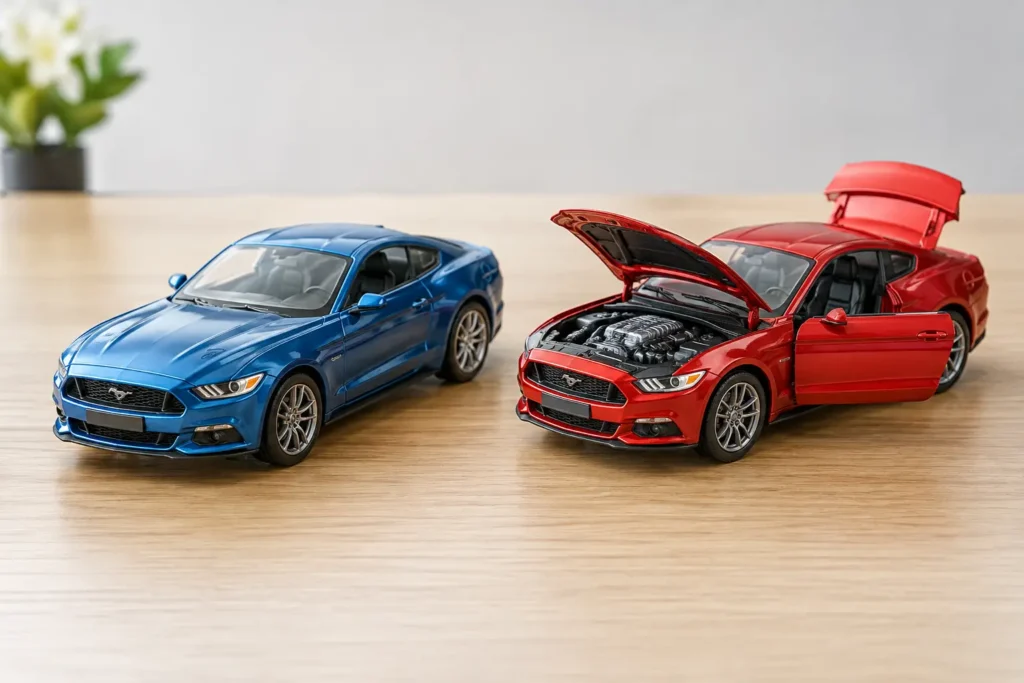
A 1/18 Ferrari with opening doors can turn a shelf display into a miniature garage scene. A sealed 1/64 Hot Wheels premium casting can look just as impressive from the outside while keeping its shape, paint, and proportions sharp. That is the real question behind sealed versus opening diecast: are you collecting the complete exterior replica, or do you want access to the details hidden inside it?
Neither style is automatically better. The right choice depends on scale, manufacturer, price point, how you display, and what makes a specific release worth adding to your collection. A collector chasing exact race liveries may care more about tampo accuracy and wheels than opening panels. Someone building a lineup of classic muscle cars may want to see every V8, interior color, and trunk compartment.
What Is Sealed Diecast?
A sealed diecast model has no moving body panels. Its doors, hood, trunk, engine cover, or tailgate are cast in place. That does not mean it is a basic toy or a low-detail model. Many sealed replicas are highly accurate, with carefully shaped body lines, realistic wheels, painted brake details, clear lenses, separate mirrors, detailed interiors, and model-specific badging.
Sealed construction is especially common in 1/64 scale, where opening parts can look oversized or interrupt the shape of the casting. It is also popular in premium 1/18 and 1/43 replicas, particularly with modern hypercars, race cars, and limited-production models. Manufacturers can focus their budget on exterior fit and finish instead of hinges, panel gaps, and internal components.
For collectors, the biggest advantage is presentation. A sealed model often has cleaner body lines because there are no door seams or hood gaps competing with the design. On a Porsche, Lamborghini, or modern Formula One car, that uninterrupted profile can make a real difference. The model looks like a finished vehicle rather than a miniature with parts waiting to be opened.
Sealed diecast can also be a smart option for display cases, wall-mounted collections, and carded Hot Wheels collections. There are fewer fragile pieces to shift, sag, or break when moving models around. If you like a clean row of exact castings organized by make, decade, colorway, or series, sealed models keep the focus on the lineup.
What Makes Opening Diecast Special?
Opening diecast models use functional doors, hoods, trunks, tailgates, engine covers, or sometimes removable body panels. At larger scales, especially 1/18 and 1/24, those features can reveal the work that makes a replica feel complete: dashboard gauges, seat textures, engine wiring, suspension pieces, cargo compartments, and chassis detail.
A well-made opening model gives you more than another angle for photos. It lets you appreciate the vehicle as a machine. Opening the hood on a 1969 Chevrolet Camaro, a Ford Mustang, or a classic Corvette makes the engine part of the display. Opening the doors on a Mercedes-Benz or BMW reveals whether the manufacturer got the cabin layout, steering wheel, console, and upholstery color right.
These pieces are especially satisfying for collectors who enjoy dioramas and garage displays. An open-hood muscle car beside a tool cart tells a different story than the same car parked with every panel closed. A race car with an opening rear cover can show the mechanical character that made the real vehicle memorable.
Opening features also help gift buyers. A recipient who is not yet a serious collector can immediately understand why a larger-scale diecast costs more when they can inspect the interior and engine. For younger hobbyists, carefully operated moving parts add hands-on fun without taking away from the display appeal.
Sealed Versus Opening Diecast: The Real Trade-Offs
The choice is rarely as simple as “more features equals better model.” Opening parts introduce real design challenges. On an opening diecast, the hood must align with the fenders, doors must sit flush with the body, and hinges must work without looking oversized. When these details are executed well, the result is excellent. When they are not, uneven gaps or loose panels can distract from an otherwise accurate casting.
Sealed models avoid many of those issues. Their fixed construction can create a more precise silhouette, particularly on low, sharply styled exotics. A sealed Lamborghini or Porsche may have a tighter-looking roofline and cleaner side profile than an opening version at a similar price. Manufacturers may also use the savings from simpler construction on better paint, finer wheels, etched details, or more accurate graphics.
On the other hand, a sealed 1/18 model can leave some collectors feeling that the experience is incomplete. If the real vehicle is famous for its engine bay, exposed mechanicals, or luxurious cockpit, seeing only the outside may not satisfy you. A 1/18 pickup truck with a fixed tailgate, for example, loses some of the character that makes a truck model fun to examine.
Price matters too, but not in a straight line. Opening models often cost more because of added engineering and assembly. Yet a sealed premium release can be more expensive than a basic opening model when it carries a limited edition, licensed livery, resin-style finish, low production run, or highly detailed exterior. Compare the exact model, scale, manufacturer, and release series rather than assuming opening features define value.
Match the Model to How You Collect
Start with your display style. If your collection lives in cases, on office shelves, or in a wall display where every model is viewed from the front and side, sealed diecast may give you the most consistent visual result. This is also true if you collect 1/64 by casting, such as matching variations of a Volkswagen, Jeep, Corvette, or Japanese tuner car. Exterior color, wheel choice, and series graphics usually matter more than access to the cabin.
If you like taking models out, photographing them, and arranging scenes, opening diecast has an obvious advantage. Open panels create depth and give each vehicle more display options. Larger scales make this choice more meaningful because the interior and engine details are easier to see without a magnifier.
Then consider the vehicle itself. A Le Mans racer, Formula One car, or Hot Wheels Car Culture release may look best sealed because its identity is all about stance, aero, wheel design, and livery. A vintage American muscle car, construction machine, fire truck, or classic pickup may reward opening features because engines, cabs, beds, and working sections are central to the appeal.
Packaging is another personal decision. Carded 1/64 collectors often prefer to leave sealed packages untouched, preserving the full release presentation. That is different from a sealed-body model. A diecast can have no opening panels and still be removed from its packaging for display. Decide whether you collect the model, the package, or both before buying duplicates.
Details to Check Before You Buy
Product photos and specifications should guide the decision, especially when shopping for a particular model year, trim, or color. Look for clear mention of scale, manufacturer, opening features, and whether a piece is diecast metal, resin, or mixed-material construction. “Diecast” alone does not guarantee metal panels, opening doors, or a detailed engine bay.
For opening models, inspect the photos for panel alignment. Closed doors and hoods should sit level with surrounding bodywork. Check whether the hood opens on realistic hinges, whether the steering works, and whether the trunk or tailgate is functional if those features matter to you. A model does not need every panel to open to be a great addition, but the features it has should suit the vehicle.
For sealed models, focus on stance, paint quality, wheel scale, graphics, window trim, lights, and interior visibility. On race cars, compare the number, sponsor markings, driver association, and livery version. On street cars, verify the exact year, trim, body style, and colorway. Small differences can separate the model you wanted from a similar release that does not fit your theme.
It also helps to buy with the rest of your shelf in mind. A sealed 1/18 modern supercar can look fantastic next to other sealed display-focused replicas. An opening 1/24 classic can become the centerpiece of a garage scene. At Diecast Moto, collectors can narrow the search around the vehicle brands, scales, and series that define their own collection rather than treating every diecast release the same.
Choose the Feature That Keeps You Interested
A sealed model is not a compromise when the casting, paint, and proportions are exactly right. An opening model is not automatically the premium choice when the extra panels do not add anything you will actually use. The best piece is the one you will still stop to look at after the new-release excitement wears off.
Pick sealed diecast when you want crisp lines, dependable shelf presentation, and a strong exterior replica. Pick opening diecast when the interior, engine, working panels, and hands-on display possibilities are part of why you collect. Build around the vehicles and details that make you want to clear a little more space on the shelf.
