
Uncategorized
Diecast Garage Display Accessories That Add Detail
Oct
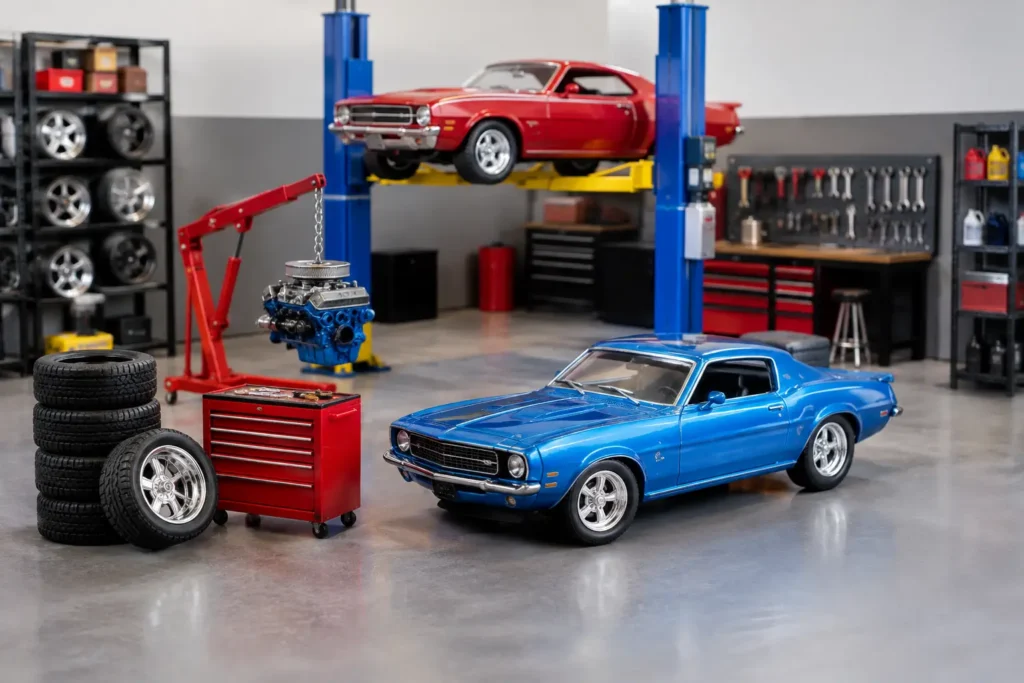
A 1/18 Porsche or a carefully chosen Hot Wheels Car Culture casting can look great on a shelf by itself. Put that same model beside a painted service lift, a tool chest, and a set of realistic wheels, and it becomes the center of a scene. Diecast garage display accessories give collectors a practical way to show off the details that made them choose a particular year, trim, livery, or colorway in the first place.
The best garage setup does not need to fill every inch with miniature parts. It needs the right scale, a believable purpose, and enough open space for the vehicle to remain the star. Whether you collect American muscle, JDM favorites, European exotics, race cars, custom trucks, or vintage service vehicles, a garage display can make a focused group of models feel even more personal.
Start With the Scale of Your Diecast Garage Display Accessories
Scale is the first decision, and it is the one collectors notice immediately. A detailed 1/18 model needs accessories made for 1/18 scale. A 1/24 garage scene needs 1/24 equipment. Mixing scales can work only when an item sits far into the background, but it is usually better to avoid the compromise. An oversized floor jack beside a small model breaks the illusion faster than almost anything else.
For 1/18 collectors, garage accessories can support the larger details found on premium models: opening doors, detailed engines, brake rotors, race interiors, and display-quality paint. Lifts, workbenches, tire racks, rolling tool cabinets, gas pumps, and wall signs all have enough room to read clearly at this size.
At 1/24, a smaller footprint is useful for a desk display or a shallow shelf. Choose fewer pieces with clean shapes, such as a two-post lift, a small workbench, a stack of tires, or a branded service sign. This scale rewards restraint because a crowded 1/24 scene can hide the model instead of framing it.
Smaller diecast vehicles, including 1/64 releases, benefit from accessories designed specifically for that scale. A diorama with a few parking barriers, a storefront facade, a transport trailer, or a compact repair bay can create a strong display without requiring a large cabinet. The goal is not to recreate a full dealership or race shop at miniature scale. It is to create a setting that makes the casting feel at home.
Pick a Garage Theme Before Buying Props
A garage becomes more convincing when the vehicles and accessories tell the same story. Start with the kinds of models you already collect. That approach helps prevent the common collector problem of buying interesting accessories that do not work together once they arrive.
A classic American muscle display might use a period-style gas pump, metal-look signs, a hydraulic lift, oil drums, and a tire rack. A 1969 Chevrolet Camaro, Ford Mustang, or Corvette looks right in a clean restoration shop or a weekend garage with a few well-chosen tools.
For a modern performance collection, think dealership delivery bay, tuning shop, or private collection garage. A Ferrari, Lamborghini, Porsche, BMW, Mercedes-Benz, or Audi can be displayed against polished concrete-style flooring, bright wall panels, wheel displays, and a low-profile workbench. The cleaner the setting, the more attention stays on paint, body lines, and wheel design.
Race cars call for a different approach. A Formula One model, GT racer, or liveried stock car looks more natural with pit equipment, tire stacks, timing boards, transport cases, or crew figures. Too much weathering may not suit a showroom-fresh race replica, while a lightly used pit-lane base can add energy without overwhelming the model.
Truck and construction collectors have room for a more working-class scene. A custom pickup can sit beside a tire service rack and welding equipment. Construction equipment can work with cones, barriers, pallets, and a small jobsite office. The accessories should match the machine’s job, not just fill empty display space.
The Accessories That Create the Most Impact
Not every accessory earns its place. Start with one anchor piece that establishes the setting, then add smaller details around it. A service lift is an obvious anchor for a garage. A dealership sign, a gas pump, a workbench, or a row of display bays can do the same job.
After the anchor piece, add supporting accessories that give the scene a reason to exist. Tool chests suggest maintenance. Loose wheels and tires suggest a build in progress. Oil drums, parts boxes, and shop stools add texture near the floor. Wall signage can add period character or reinforce the brand identity of the vehicles on display.
Figures are optional, but they can make a static display feel active. The trade-off is realism. A well-proportioned mechanic figure working near an open hood can add a lot. A figure with an obviously mismatched scale or exaggerated pose can pull attention away from an otherwise sharp setup. If you use figures, use one or two rather than creating a crowded workshop crew.
Lighting is another high-impact choice. Small LED strips above a shelf can bring out metallic flake, chrome trim, and interior details, particularly on 1/18 models. Keep the light neutral or slightly warm for a natural garage feel. Colored lighting can work for a custom tuner scene, but it may alter the paint color that made a particular release special.
Build the Display From the Floor Up
The floor does more work than many collectors expect. A plain shelf is fine, but a printed or textured base immediately defines the scene. Concrete-style surfaces suit service garages, race workshops, and industrial vehicle displays. Checkered tile works for a classic showroom or restoration bay. Asphalt or painted parking lines can turn a group of 1/64 models into a meet-up, dealership lot, or street scene.
Leave room around the model. An accessory placed too close to a vehicle can block the wheels, graphics, or body profile. This matters especially for models with exact racing liveries, special-edition graphics, or recognizable side stripes. Display accessories should guide the eye toward the vehicle, not make collectors search for it.
Use height carefully. A lift creates vertical interest, but it should not make every other car disappear below it. A tiered arrangement is useful when you have several models in the same scale, such as a group of Ford Mustangs or Porsche 911 variants. Put the most detailed or rarest piece where it can be viewed from the front and side.
Dust protection is worth considering for any long-term setup. An open scene is easy to adjust, photograph, and enjoy, but accessories collect dust just as quickly as the models. A display case, enclosed cabinet, or clear cover protects fine details and reduces cleanup. If you rotate models often, an open shelf may be the better choice. It depends on whether the display is meant to be a permanent scene or an evolving part of the collection.
Match the Detail Level to the Model
A premium diecast with opening panels and a highly finished interior deserves accessories with crisp paint and convincing proportions. A simpler model can still look excellent in a garage scene, but expensive ultra-detailed props are not always necessary. Balance is more important than price.
Likewise, do not feel required to make every display photo-perfect. Some collectors prefer a clean museum-style garage with identical bays and carefully spaced vehicles. Others want a project-car corner with spare wheels, parts boxes, and a car raised on a lift. Both approaches work when the scale is consistent and the scene supports the collection.
Think of your display as another part of collecting, not a final task after the models are purchased. A new limited-release casting, a favorite color variant, or a long-awaited race car can give you a reason to move pieces around and create a fresh scene. The right diecast garage display accessories make that process more fun, while keeping every model’s year, trim, and character in clear view.
A good garage display should make you pause on the way past the shelf. Start with one car worth showing, add the setting it deserves, and let the collection grow from there.
