
Uncategorized
Model Aircraft: A Collector’s Buying Guide
Aug
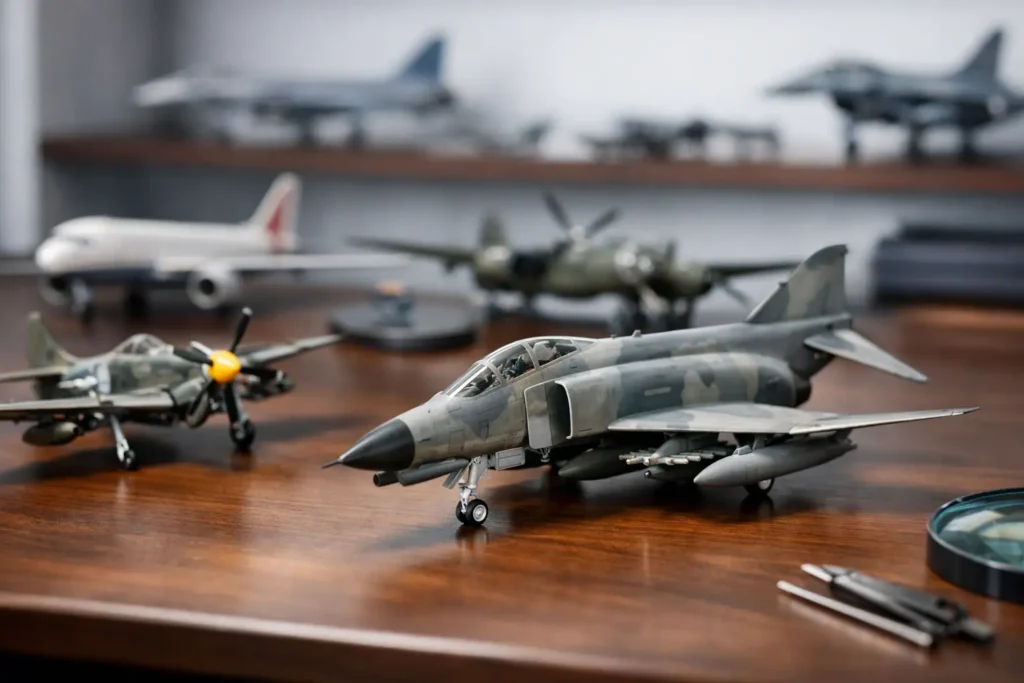
A Boeing 747 in classic Pan Am colors, a polished American Airlines DC-3, or a modern Airbus A350 in a special-edition livery can tell more of a story on a shelf than a generic airplane replica ever could. That is what makes model aircraft collecting so satisfying: every piece can represent a favorite airline, an engineering milestone, a military unit, a memorable route, or an era of aviation.
For collectors who already appreciate precise diecast cars, trucks, and construction equipment, aircraft bring a different kind of detail to the display. There are fewer moving parts to chase than on some automotive models, but the details that matter are exceptionally specific: fuselage markings, engine configuration, wing shape, landing gear, registration number, and scale. Choosing well starts with knowing exactly what kind of collection you want to build.
Start With a Clear Aircraft Theme
The fastest way to turn a few interesting purchases into a real collection is to establish a theme. It does not need to be rigid, but it should give your next purchase a reason to belong. A collector might focus on commercial aviation, military aircraft, historic propeller-driven planes, one airline, or a single aircraft family such as the Boeing 737 or Airbus A320.
Commercial airline collections offer an enormous amount of variety without leaving a familiar category. The same Boeing 747 can appear in multiple airline liveries, from early heritage markings to current paint schemes and anniversary releases. Airbus and Boeing models also make it easy to build a display around competing airframes. A 1/400 Airbus A350 beside a Boeing 787, for example, creates a compact modern widebody lineup with obvious visual contrast.
Military aircraft collecting is often more unit- and era-driven. Some collectors build a World War II display with fighters, bombers, and transport aircraft. Others prefer Cold War jets or modern military aviation. In this category, authenticity often comes down to squadron insignias, tail numbers, camouflage patterns, armament details, and the correct national markings.
There is also a strong case for collecting by personal connection. Maybe you want aircraft from airports you have visited, airlines you remember from childhood, or planes that served on routes near your home. Those collections have a point of view, and they are usually more fun to add to over time than a shelf full of random releases.
Choosing the Right Model Aircraft Scale
Scale is one of the first details to check because it determines both the model’s size and how naturally it will fit with the rest of your display. Unlike diecast cars, where 1/18 and 1/24 are common collector scales, aircraft collectors often encounter 1/400, 1/200, 1/100, and 1/72.
A 1/400 scale model aircraft is a popular choice for airline collectors because it offers a broad range of aircraft in a manageable footprint. Narrowbody jets, regional aircraft, and widebodies can all be displayed together without requiring a dedicated room. It is a practical scale for collectors who want to recreate an airport scene or line up a large fleet by airline.
At 1/200, the individual aircraft have more shelf presence. Paint applications, cockpit windows, landing gear, antenna details, and engine shapes are often easier to appreciate. The trade-off is space. A widebody aircraft at 1/200 can quickly become the centerpiece of a shelf, which is great for a curated display but less ideal for collectors who want dozens of models in one case.
Larger military models commonly appear in scales such as 1/72 or 1/48. These can show off panel lines, propellers, weapons, and cockpit detail in a way smaller scales cannot. They also make more sense when the individual aircraft is the subject, rather than one piece in a large airline fleet.
Before buying, measure the intended shelf or display case. Wingspan can be the surprise dimension. A model may look compact from nose to tail but take up significant width once its wings and stand are considered. If you plan to mix scales, do it intentionally. A 1/200 flagship airliner can look excellent as a centerpiece above a 1/400 airline fleet, but it will not look scale-matched beside it.
What Separates a Great Diecast Aircraft From a Basic Replica
A strong collectible is not just about the aircraft type. It is about how accurately the specific release captures it. Collectors should look past the headline name and check the details that identify the exact aircraft.
For commercial models, livery quality is a major factor. Look closely at the airline logo placement, cheatlines, tail art, registration markings, engine branding, and the color match of the fuselage and wings. Historic liveries are especially appealing because small inaccuracies can change the entire look. A special-edition scheme, retro colorway, or airline anniversary release can also make a familiar aircraft stand out.
The airframe itself matters just as much. Aircraft enthusiasts notice the difference between a Boeing 747-200 and a 747-400, or between an Airbus A330-200 and A330-300. Engine types, winglets, fuselage length, cockpit shape, and landing gear configuration can distinguish one variant from another. Product titles with the airline, aircraft type, scale, registration, and manufacturer are useful because they tell you whether you are buying the specific version you want.
On military releases, investigate the represented aircraft rather than assuming all versions of a fighter or bomber are alike. A particular F-14, P-51 Mustang, or B-17 may be tied to a known pilot, squadron, campaign, or historic mission. Those details give a model lasting collector appeal beyond its paint scheme.
Material also affects the experience. Diecast metal models generally provide reassuring weight and crisp construction, while plastic components may be used for antennas, landing gear, propellers, or smaller exterior details. Neither material choice is automatically better. A model designed for gear-up display may look cleaner on its stand, while a landing-gear-down version can add realism to an airport or hangar scene.
Build a Display That Makes the Details Visible
Aircraft deserve room around them. A packed row of models can hide the tail designs, wings, and engine details that made you buy them in the first place. Give each aircraft enough separation for its shape to read clearly, particularly if you collect widebodies or military aircraft with large wingspans.
A simple arrangement by airline creates a clean, catalog-like display. Grouping aircraft by era can be even more interesting: early prop liners, first-generation jets, classic widebodies, and current composite aircraft. Military collectors may prefer displays by country, branch, conflict, or aircraft role.
Use stands when they are included and fit the look you want. In-flight stands make it easier to display aircraft at different heights and can prevent landing gear from carrying unnecessary weight over long periods. Ground displays have their own appeal, especially for collectors who enjoy airport dioramas, terminal scenes, or runway layouts.
Keep models away from direct sunlight, heat sources, and high-humidity areas. Sun exposure can fade paint and decals over time, while dust settles quickly on wings, stabilizers, and landing gear. A covered display case is ideal, but a regularly cleaned open shelf works well when space is limited. Use a soft brush or air blower rather than pressing cloth into delicate antennas or gear.
Buy for Collection Value, Not Just Availability
Limited production runs, discontinued liveries, and special releases can make certain aircraft more difficult to find later. That does not mean every limited edition belongs in every collection. The better question is whether it adds something specific: a missing airline, a key aircraft variant, a historic livery, or a meaningful upgrade over a model you already own.
For newer collectors, it is usually smarter to buy a few aircraft with a clear connection than to chase every release. A small fleet of accurate Boeing and Airbus models in favorite airline colors has more visual impact than a scattered assortment. Experienced collectors can use wishlists to track hard-to-find registrations, matching scales, or aircraft that complete a series.
Condition matters, especially when buying models intended to remain boxed or when pursuing older releases. Check that the stand, landing gear, antennas, and original packaging are present when those pieces matter to you. For display collectors, a carefully finished model may be the priority. For sealed-box collectors, package condition can carry more weight. It depends on whether the collection is meant to be viewed, preserved, or eventually traded.
Diecast Moto shoppers can apply the same collector discipline used for cars and trucks: read the full product identification, confirm the scale, compare the exact paint scheme, and buy the version that strengthens the collection rather than simply filling a cart.
The best model aircraft collection is never really finished. Leave a little room on the shelf for the airliner, fighter, transport, or heritage livery that turns a good lineup into one that feels unmistakably yours.
