
Uncategorized
Airline Livery Collecting Guide for Diecast Fans
Sep
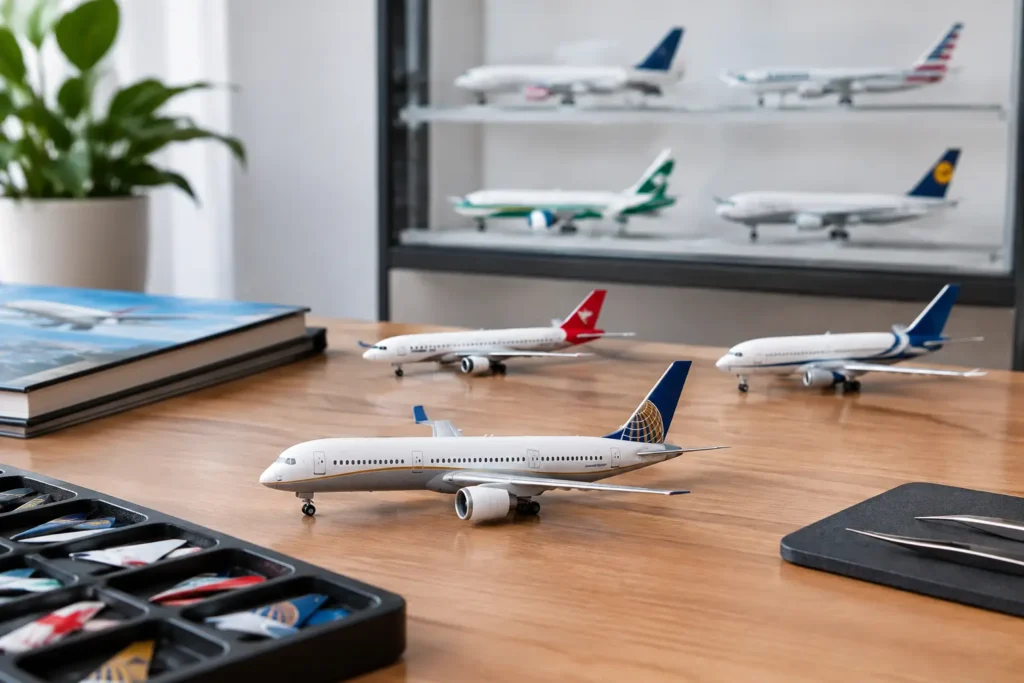
A white Boeing 747 in a classic airline color scheme can look completely different beside the same aircraft in a one-off anniversary design. That contrast is what makes airline models so satisfying to collect. This airline livery collecting guide is built for collectors who want more than a random row of aircraft. The goal is a display with a clear story, accurate details, and enough room to keep growing.
Build Your Airline Livery Collecting Guide Around a Lane
The fastest way to lose focus is to buy every attractive aircraft model that appears. There is nothing wrong with a mixed display, especially when you are starting out, but a collecting lane makes each purchase more meaningful. It also helps you choose between two similar releases when shelf space and budget are limited.
A lane can be based on an airline, an aircraft family, a period of aviation history, a region, or a livery type. Some collectors build a fleet around a favorite carrier and track its paint changes from early cheatline schemes to modern billboard-style branding. Others collect one airframe, such as the Boeing 737, Airbus A320, 747, or A380, across different operators. A third option is to focus entirely on special liveries: sports teams, heritage colors, wildlife art, military support schemes, state visits, and anniversary aircraft.
There is a trade-off. An airline-specific collection creates a clean, consistent display, but certain older releases can be difficult to find. An aircraft-type collection gives you more buying options, yet it may feel visually scattered without a rule for era or region. Pick the approach that makes you want to keep searching. The best theme is one you can describe in a sentence.
Choose a Scale Before You Build Depth
Scale is one of the biggest decisions in aircraft collecting because it controls detail, display size, and how many models you can realistically own. A 1:500 model is compact and works well for collectors building a busy airport scene or a broad fleet. At 1:400, aircraft are still display-friendly while offering recognizable printing, landing gear on many releases, and a strong range of commercial airline subjects. This is often the practical middle ground for airline livery collectors.
Larger 1:200 aircraft make more of a statement. They show off engine detail, cockpit printing, antennae, and special artwork beautifully, particularly on widebody jets. They also require serious room. A 1:200 Boeing 747 or Airbus A380 can dominate a shelf, which is a feature for some collectors and a limitation for others.
Try not to mix scales in the same lineup unless you are deliberately building separate sections. A 1:200 narrowbody beside a 1:400 widebody can look odd because the aircraft sizes no longer relate realistically. If you want a flexible start, choose 1:400 for commercial fleets or 1:200 for fewer, more detailed centerpiece pieces.
Learn What Makes One Livery Worth Chasing
Not every unusual paint scheme is equally collectible. Rarity matters, but it is only one part of the appeal. A model becomes memorable when the livery connects to a real aviation moment, a long-running airline identity, or a design that stands out from across the room.
Heritage liveries are usually a strong foundation because they bring historical context to a modern airframe. An airline may paint a current Boeing or Airbus jet in colors from an earlier era, letting one model represent two chapters of its history. Retired airline liveries have a different pull. They can preserve brands, logos, and color combinations that no longer appear at airports, making them especially appealing to longtime aviation fans.
Special event liveries tend to be more selective purchases. A bold design may be exciting at release but feel disconnected from your display later. Before buying, ask whether the model fits your theme, whether the real aircraft wore the scheme for a meaningful period, and whether you would still want it if it were not limited. That simple check cuts down on impulse buys.
Pay close attention to details that distinguish a true special release from a standard fleet model. Registration numbers, engine markings, logo placement, tail art, winglet graphics, and aircraft configuration all matter. Two models of the same airline and aircraft type can represent completely different real-world aircraft.
Fleet Liveries vs. One-Off Aircraft
A standard fleet livery is not a boring choice. In fact, it is often the backbone of a convincing collection. If you are documenting an airline’s history, you need the everyday colors before the special schemes make sense. Standard models are also useful for airport displays, route-themed collections, and comparisons between operators.
One-off aircraft bring personality. Use them as focal points rather than making every piece a novelty release. A display with mostly fleet models and a few well-chosen special liveries often feels more intentional than a shelf packed only with bright tails.
Check Accuracy, Condition, and Packaging
Collectors should look beyond the headline livery. Paint quality and printing can vary between manufacturers and production runs, so inspect product photos and descriptions closely. Clean registration printing, straight cheatlines, centered logos, properly fitted landing gear, and secure antennae can make a noticeable difference at any scale.
Condition matters most when you are collecting limited releases, discontinued airline brands, or older models sold on the secondary market. A missing stand, bent landing gear, paint rub, loose engine, or cracked display case can affect both presentation and collector value. Original packaging is worth keeping, even if you display every model. Boxes and outer sleeves protect models during a move and help identify an exact release years later.
Be careful with the word “rare.” A low production number can be appealing, but rarity does not automatically mean high demand. A well-executed model of a famous airline, beloved aircraft type, or historic livery may remain more desirable than a scarcer release with limited collector interest. Buy the model first, the production story second.
Organize a Display That Tells the Story
Aircraft models reward organized displays. Even a small shelf can look like a focused collection when the arrangement follows a simple logic. You might group aircraft by airline, then place older liveries before newer ones. Another effective approach is arranging by aircraft family, with narrowbodies together and widebodies on a separate level.
If you are building an airport-style scene, keep the scale consistent and leave enough spacing for wingspans. Wider aircraft need breathing room. Models packed wingtip to wingtip are harder to appreciate and more likely to be damaged while dusting. Stands can create a departure-bank look, while landing-gear displays feel more like a ramp or terminal scene. Either works, but mixing both styles at random can make the display feel unfinished.
Sunlight is the enemy of printed color. Keep models out of direct windows, and avoid high-heat areas that can affect plastic parts, decals, or display cases. A soft makeup brush or air blower is safer than wiping detailed surfaces with a cloth. Handle models by the fuselage when possible, not by the wings, tail, gear, or engines.
Buy With a Shortlist, Not Just a Wishlist
A wishlist is great for tracking dream releases, but a shortlist is what keeps a collection moving. Keep a small group of models you would buy next, ranked by importance. Include the exact airline, aircraft type, registration when relevant, livery name, scale, and preferred condition. Those details prevent accidental duplicates and make it easier to spot the right release when inventory changes.
It also helps to set a simple rule for new arrivals. For example, a new special livery may need to match an airline already represented in your collection, or every 1:200 widebody purchase may require a dedicated display location first. Rules are not there to make the hobby rigid. They protect your budget and make the models you do bring home feel earned.
A great airline collection is never really finished, because airlines repaint fleets, retire icons, launch new routes, and create fresh special schemes. Leave one space open on the shelf. The next aircraft that fills it should add a chapter you genuinely want to see every time you walk past the display.
