
Uncategorized
Diecast Gasser Car Models Worth Collecting
Sep
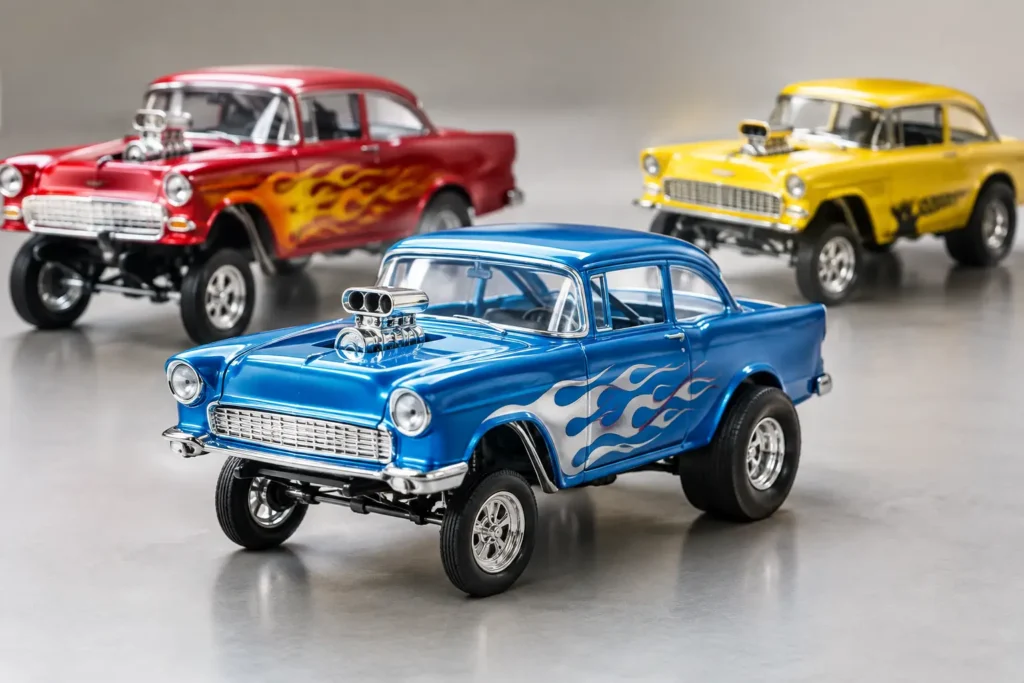
A properly done gasser does not need a long explanation. The front end sits high, the nose points toward the finish line, and the whole car looks ready to leave hard when the light turns green. That is the appeal of diecast gasser car models: they capture a loud, inventive chapter of American drag racing in a size that fits on a shelf, in a display case, or right alongside a favorite muscle car collection.
Gassers are especially satisfying for collectors because they are not simply stock classics in different paint. Their stance, engine treatment, sponsor graphics, wheel choice, and period-correct body styles give every release real personality. Whether you collect Hot Wheels drag castings or larger 1/18 and 1/24 replicas, knowing what makes a gasser special helps you choose models you will still be excited to display years from now.
What Makes a Gasser a Gasser?
The original gasser classes grew from postwar drag racing, when racers modified production-based cars to compete in gasoline-powered categories. The most recognizable builds used front-engine, rear-wheel-drive American vehicles, often from the 1930s through the 1960s. Racers raised the front suspension for weight transfer, fitted larger rear tires, and added serious V8 power.
That raised front end is the feature most collectors recognize first. On a diecast, it creates a dramatic profile that separates a gasser from a factory-stock coupe, a street machine, or a modern pro-mod style drag car. Open headers, exposed superchargers, radiator details, injected engines, steel wheels, and period lettering all build on that unmistakable look.
Not every vintage drag-themed diecast is a true gasser, and that distinction can matter if you collect by era or class. Some releases borrow the high-nose stance and racing graphics for a custom look rather than duplicating one specific competition car. Those are still fun additions to a collection. Just treat them as gasser-inspired customs unless the manufacturer identifies a documented race vehicle or historically accurate build.
Why Diecast Gasser Car Models Stand Out
Gassers combine several collecting lanes in one casting. A single model may appeal to fans of Chevrolet Tri-Fives, Ford coupes, Willys bodies, classic Mopars, vintage drag racing, custom paint, and Hot Wheels history. That crossover appeal is why the best gasser releases rarely look out of place, even in a mixed display.
They also bring energy to a shelf full of low-slung muscle cars. A row of factory-stock 1969 Camaros and Mustangs can look clean and organized, but add one lifted-nose 1955 Chevy with a blown engine and racing livery and the whole display gains movement. The model tells a story before anyone reads the base or package.
For collectors who enjoy details, gassers reward close inspection. A premium model may feature a separate engine piece, realistic interior, detailed grille, rubber tires, metal base, or carefully applied sponsor markings. At smaller scales, the best castings use tampo graphics and proportion to deliver the same attitude without needing every under-hood component.
Choose a Body Style That Fits Your Collection
There is no single right gasser to collect. The strongest choice depends on the vehicles, eras, and series already on your shelf. If you collect 1950s American cars, a Chevrolet Bel Air or 210-based gasser can connect naturally with your Tri-Five collection. Ford fans may prefer a vintage coupe or a later Falcon-style drag build. Willys gassers bring one of the most instantly recognizable competition shapes, with compact proportions and a serious nose-up posture.
Start with the body styles you genuinely enjoy, then narrow your search by color, livery, and scale. A bright red or yellow car may become the focal point of a display, while a black, white, or bare-metal-style release can work better in a period racing lineup. Sponsor graphics are equally personal. Some collectors want recognizable speed-shop branding and race numbers; others prefer clean customs with minimal decoration.
Authenticity and visual impact do not always point to the same release. A licensed replica tied to a real racer may be the better historical piece, while an imaginative fantasy livery could be the model that makes you stop every time you walk past the case. There is room for both, especially when the casting itself is strong.
Hot Wheels Gassers for Carded and Loose Collectors
Hot Wheels gassers have earned a dedicated following because the brand can turn classic drag-race proportions into highly collectible small-scale releases. Series names, wheel variations, colorways, packaging, and limited availability can all influence collector interest. A familiar casting in a new deco can feel completely different from an earlier release.
Carded collectors may focus on clean blisters, flat cards, sharp corners, and intact hanging tabs. Loose collectors can put more attention on the model itself: paint condition, wheel alignment, tampo quality, and whether the chassis and body show shelf wear. Neither approach is better. The choice comes down to whether you value package art and release history or want the freedom to stage the car in a garage, drag strip, or mixed-scale scene.
If you are opening models, keep the card back when it includes useful series information, a collector number, or a release description. It takes almost no space and can be helpful later when you are cataloging a collection.
Larger Scales Bring Out the Race-Car Details
At 1/18 and 1/24 scale, gasser replicas can show more of the mechanical character that makes the class so appealing. Look for a convincing ride height, a detailed engine bay, accurate wheel and tire proportions, interior race equipment, and crisp trim. Opening doors, hoods, or trunks can be a bonus, but they are not automatically a sign of a better model. A sealed-body replica with excellent proportions and paint can be more display-worthy than an opening model with weak panel gaps.
Larger scales also require more display planning. A 1/18 gasser can dominate a shelf, which is perfect if it is a centerpiece but less practical if you are building a large multi-car lineup. A 1/24 model offers a useful middle ground for collectors who want visible detail without giving up too much space.
Check These Details Before You Buy
When comparing diecast gassers, do not rely on a product photo alone. Read the full model identification. The year, body style, scale, manufacturer, series, color, and edition designation help distinguish one release from another, particularly when a casting has appeared in multiple versions.
Condition matters most when you are buying older pieces or building a mint packaged collection. Check for paint rash, chipped edges, cracked blister packaging, bent card corners, missing mirrors, warped tires, and loose parts. On premium models, inspect the windshield, chrome pieces, decals, and any opening panels. A small flaw may be perfectly acceptable for a loose display model, but it should be reflected in the price.
Rarity deserves a level-headed approach. Limited production, discontinued series, and desirable colorways can make a model harder to find, but scarcity alone does not create a great collection. Buy the casting, body style, and execution first. Treat potential value as a secondary consideration, because collector demand changes and condition will always matter.
Build a Display With Some Racing Context
Gassers look best when they have a little room to show off their stance. Avoid crowding tall models directly beneath low shelves, and leave enough depth that the raised front axle is visible from an angle. A simple tiered riser can make a small-scale gasser stand out behind a row of street cars without hiding the cars in front.
You can organize a display by manufacturer, decade, scale, or drag-racing theme. A period setup might pair a 1930s or 1940s coupe gasser with 1950s Chevrolets, vintage service trucks, and a few race-inspired accessories. A brand-focused shelf could place Ford, Chevrolet, or Mopar gassers beside factory stock versions of related vehicles, showing how far racers took those original designs.
For carded Hot Wheels, use a layout that keeps cards straight and avoids direct sunlight. UV exposure can fade card art and paint over time. For loose and premium-scale models, dust is the everyday enemy. A closed case is ideal, but regular gentle cleaning with a soft brush works well when a case is not practical.
Collect What Makes You Look Twice
The best gasser collection does not need to follow somebody else’s checklist. It can be a tight group of one casting in every known color, a shelf of 1950s Chevy drag machines, or a mix of small-scale customs and detailed 1/18 race replicas. Diecast Moto collectors often know the feeling: you spot the right body, stance, and paint combination, and suddenly a model you were not planning to buy becomes the piece your display was missing.
Leave room for that kind of find. A great gasser should look like it has somewhere to be, even when it is parked on your shelf.
