
Uncategorized
Lamborghini Model Cars for Collectors Worth Owning
Jul
A Lamborghini looks dramatic at full size. In miniature, the same details decide whether a model earns a permanent display spot or becomes a quick impulse buy. Lamborghini model cars for collectors can range from an accessible 1/64 casting with a standout colorway to a premium 1/18 replica with opening panels, detailed wheels, and a carefully finished cabin. The right choice comes down to more than the name on the box.
For many collectors, Lamborghini is a natural collection centerpiece. The brand has never been subtle, and neither are its most memorable models: sharp Countach lines, the wide stance of the Diablo, the unmistakable Murcielago, or the modern presence of the Aventador, Huracan, and Revuelto. Each generation offers a different shape, era, and collecting angle.
Choosing Lamborghini Model Cars for Collectors
The first decision is not necessarily which Lamborghini you like best. It is what kind of collection you want to build. A single large-scale exotic can anchor a display shelf, while a line of smaller models can tell the story of the brand from classic V12 legends to current supercars.
Collectors who enjoy specific automotive eras may focus on the Miura and Countach years. These are cars with recognizable silhouettes even to people outside the hobby, and they look especially strong in period-inspired colors. Others prefer the modern Lamborghini lineup, where angular bodywork, large wheels, and bold paint create instant shelf appeal. Motorsport fans may narrow the search further to Super Trofeo, GT3, or other racing liveries.
There is no wrong lane, but a clear lane helps prevent random purchases. A display of every yellow Lamborghini can look intentional. So can a row of 1/18 V12 flagships, a group of race-prepared Huracans, or a compact 1/64 assortment of favorite castings. The best collections usually have a point of view.
Start With the Vehicle, Not Just the Badge
A Lamborghini badge adds excitement, but not every release carries the same collector appeal. Look closely at the exact vehicle name, model year, trim, and body configuration. An Aventador LP 700-4, Aventador SVJ, and Aventador Ultimae are all related, yet their wheels, aero details, and collector demand can be quite different.
The same applies to special versions. Road cars, convertibles, track-focused editions, police liveries, race cars, and limited color releases all occupy their own space in a collection. If accuracy matters to you, compare the release name to the model’s visible details rather than buying based on a quick thumbnail image.
Scale Changes the Entire Experience
Scale is one of the most practical parts of buying diecast, especially when space is limited. A 1/18 Lamborghini is large enough to reward close inspection. It can show brake rotors, seat patterns, dashboard controls, engine bay details, and finely shaped exterior trim. It also takes up meaningful room, so a few carefully selected models may make more sense than an overcrowded shelf.
A 1/24 model is a useful middle ground. It provides more presence than a small collectible while staying manageable for desks, bookcases, and gift displays. For collectors building a garage scene or mixing several brands, 1/24 can offer a balanced format.
At 1/64 scale, the focus shifts toward variety, series collecting, and display density. These models are ideal for collectors who want multiple generations of Lamborghini, several color variations, or a mix of exotic cars and racing releases without needing a dedicated display case. A well-executed small-scale casting can still capture the stance and character that makes a Lamborghini recognizable from across the room.
Before ordering, measure the shelf or case where the model will live. This sounds basic, but it prevents a common problem: buying a spectacular 1/18 piece that has nowhere safe to display. Consider the model’s length, the packaging you plan to retain, and whether the doors or hood need extra clearance when opened.
Details That Separate a Good Replica From a Great One
A collector-grade Lamborghini should look convincing before you even inspect the fine print. Start with proportions. The roofline, wheel placement, front overhang, rear wing, and overall stance matter more than a long list of tiny features. A model with accurate proportions often feels more realistic than one loaded with opening parts but sitting too high on its wheels.
Then move to finish quality. Paint should appear even and clean, with stripes, accents, and graphics placed sharply. On race cars, livery accuracy is a major part of the appeal. Sponsor markings, number panels, mirrors, wheels, and aerodynamic components should match the identity of the car being represented.
Interior detail matters most in larger scales. Look for a dashboard that resembles the real vehicle, separately finished seats, visible steering-wheel detail, and a cabin color that fits the exterior specification. On models with opening features, panel gaps and hinge operation are worth checking as well. More moving parts can add enjoyment, but they also create more opportunities for fit issues. A sealed-body model is not automatically less collectible if the casting and finish are excellent.
Packaging has its place, too. Some collectors display models loose; others keep every box, sleeve, and protective insert. Original packaging can make storage easier and may matter when you later trade, sell, or reorganize part of a collection. If you are buying a limited production release, keeping the packaging in good condition is usually the safer move.
Colors, Editions, and the Pull of the Variant
Lamborghini has built much of its visual identity around color. Yellow, green, orange, red, black, white, and metallic shades can make the same casting feel completely different. A bright color often shows off body lines and aero details, while black can make a modern model look more aggressive and understated at the same time.
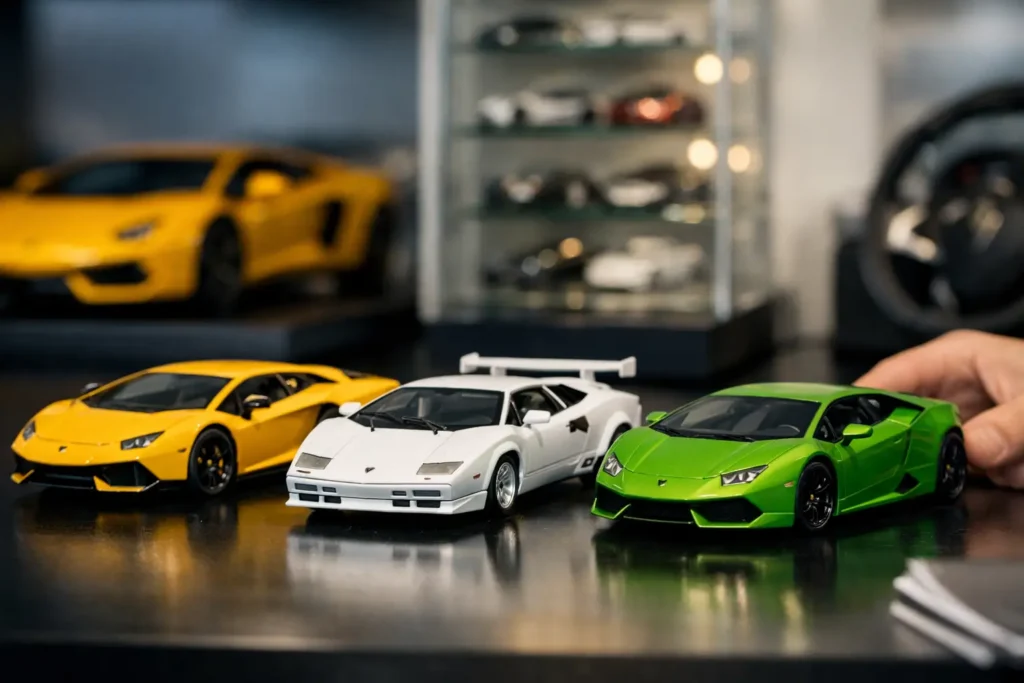
That does not mean the loudest color is always the best choice. If you are building a display around a particular era, period-correct or factory-associated colors may be more satisfying than chasing every variant. A metallic silver Miura, a white Countach, or a vivid modern Huracan can each make sense depending on the story your shelf tells.
Edition names also deserve attention. Manufacturer, series, production status, and any numbered-edition information help identify what you are buying. Experienced collectors often shop for the exact release rather than just “a Lamborghini.” That specificity is useful when comparing similar castings, avoiding duplicates, or completing a themed run.
Buy for Your Collection, Not the Hype
Limited editions and hard-to-find releases can be exciting, but rarity alone does not guarantee lasting satisfaction. A model you genuinely enjoy seeing every day is usually a better addition than a scarce release that does not fit your scale, era, or display plan.
It helps to separate three reasons for buying: personal attachment to the real car, appreciation for the model’s execution, and interest in the release itself. The strongest purchases often check at least two of those boxes. Maybe the car was a childhood poster favorite, the casting is beautifully proportioned, or the livery completes your motorsport shelf.
For gift buyers, this approach makes selection easier. If you know the recipient’s favorite Lamborghini generation, preferred scale, or favorite color, you can choose with confidence. If you do not, a recognizable model such as a Countach, Diablo, Aventador, or Huracan in a display-friendly scale is often a safe starting point.
Build a Display That Lets the Cars Speak
Lamborghini models benefit from breathing room. Their shapes are busy by design, with intakes, wings, vents, and sharp edges competing for attention. Giving each piece a little space makes a smaller collection look more premium than a crowded shelf full of hidden details.
Arrange models by generation, color, scale, or theme. A progression from Miura to Countach to Diablo to Murcielago creates a clear visual timeline. A row of race cars can work just as well if each model has enough room for its livery and wing package to stand out. Keep direct sunlight off painted models when possible, and use a dust-resistant case for pieces with detailed interiors or light-colored finishes.
Whether you collect one flagship 1/18 replica or chase a full run of small-scale castings, choose models that make you pause when you walk past the display. That is the kind of Lamborghini collection worth continuing.
