
Uncategorized
Custom Pickup Truck Diecast Collecting Guide
Oct
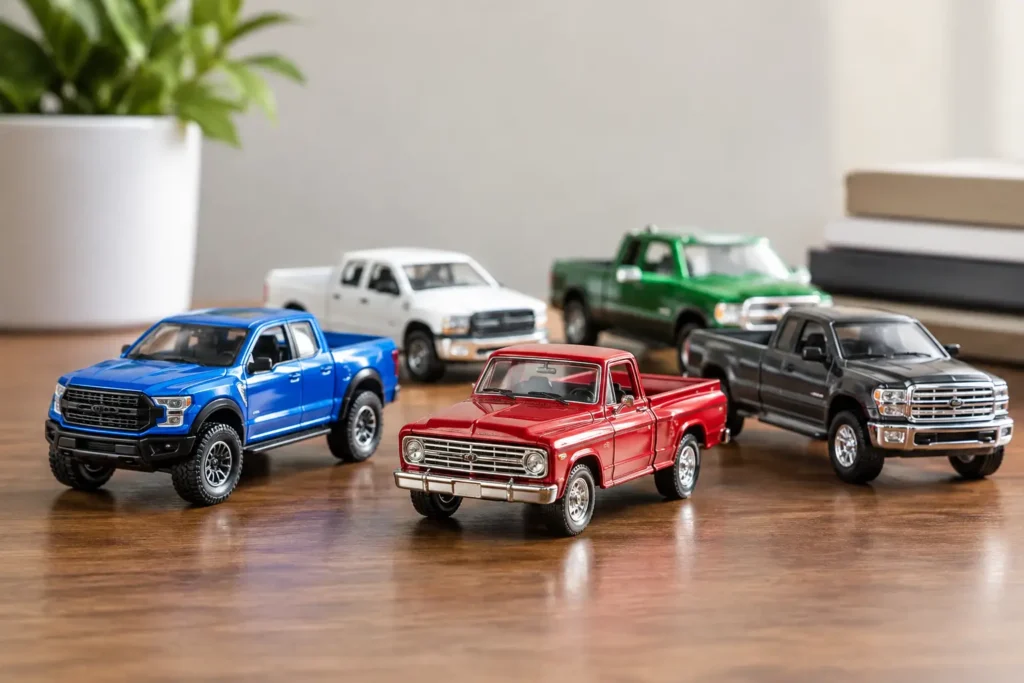
A custom pickup truck diecast can say more about a collection than another factory-stock model ever could. Lowered suspension, oversized wheels, a period-correct two-tone paint job, a lifted 4×4 stance, or a bed full of miniature detail gives a truck personality. For collectors, that personality is the point. The best pieces capture a real truck culture moment, whether it is a slammed 1950s Chevrolet, a square-body Chevy with street-truck attitude, or a modern Ford built for off-road trails.
Custom truck collecting is broad enough for casual buyers and focused enough for specialists. A single standout casting makes a strong desk display or gift. A carefully planned lineup can trace decades of American pickup design, from classic haulers to sport trucks and lifted late-model builds.
Why Custom Pickup Truck Diecast Models Stand Out
Pickup trucks were built to be used, modified, and made personal. That history carries over especially well at diecast scale. A standard production truck may be historically accurate, but a custom version has an immediate visual story. The wheel choice, stance, color, graphics, and accessories show what kind of build it is meant to represent.
That makes custom trucks a natural fit beside muscle cars, hot rods, and drag machines. A 1/64 truck with chrome five-spoke wheels and a low ride height can bring the feel of a local cruise night to a display. A detailed 1/18 or 1/24 pickup can become the centerpiece of a garage diorama, especially when the engine bay, interior, opening panels, and suspension details support the exterior finish.
Collectors also get more variety from custom trucks than from many vehicle categories. One casting might appear as a clean street truck, a race support vehicle, a lifted off-road build, or a weathered shop truck. The casting may be familiar, but the execution can make each release feel completely different.
Start With the Truck Style You Actually Want
The fastest way to build a collection with direction is to choose the truck style that pulls your attention first. This does not mean every piece has to match. It gives you a useful filter when new releases, special colors, and limited series start competing for shelf space.
Classic American pickups remain a favorite because they work in nearly every custom style. Chevrolet C10 and Silverado models, Ford F-Series trucks, Dodge pickups, GMC trucks, and vintage panel-style haulers all offer recognizable shapes and plenty of modification potential. A 1950s stepside with patina has a very different presence from a 1990s sport truck with bright paint and deep-dish wheels.
Street Trucks and Lowered Builds
Street-truck diecasts usually lean on stance. Look for lowered ride height, larger wheels, performance tires, shaved trim, custom grilles, and bold paint colors. These releases often pair well with muscle cars and drag-oriented models because they share the same show-and-go attitude.
A clean build can be just as collectible as a loud one. Black, white, silver, and factory-inspired colors reveal body lines and wheel design clearly. Brighter finishes, metallic flake, candy colors, and graphic packages bring extra energy to a display. Which works best depends on whether you prefer a cohesive shelf or a lineup that grabs attention from across the room.
Lifted and Off-Road Trucks
Lifted pickups tell a different story. Larger tires, raised suspension, brush guards, auxiliary lights, roll bars, and bed-mounted accessories create a purpose-built look. These models fit naturally with Jeeps, SUVs, construction equipment, trailers, and other off-road subjects.
At smaller scales, stance is especially worth checking. A well-proportioned lifted truck looks capable without appearing cartoonish. At larger scales, inspect the tire tread, chassis clearance, shocks, steering components, and underbody treatment. Those details help separate a general toy-like model from a more serious collectible replica.
Vintage Customs and Shop Trucks
Vintage custom pickups offer some of the richest display possibilities. They can represent restoration projects, speed-shop parts runners, race-team support trucks, or hard-working classics with faded paint and useful accessories. A weathered finish can be highly appealing when it is intentional and carefully applied. It should look like character, not poor production quality.
These are also excellent choices for collectors who enjoy dioramas. A vintage pickup beside a service station, garage, trailer, or race car can create a complete scene without needing a huge number of models.
Choose the Right Scale for Your Collection
Scale determines how a custom truck looks, how much detail it can carry, and how easily it fits with what you already own. There is no universal best choice. The right scale is the one that suits your display space, budget, and collecting habits.
The popular 1/64 scale is compact, affordable, and full of variety. It is ideal for collectors chasing specific castings, series releases, color variants, and themed groups. Small-scale trucks are easy to organize in cases, wall displays, or multi-level shelves. Because they take up less room, they also make it easier to collect several versions of the same truck without committing an entire cabinet to one subject.
A 1/24 custom truck offers a larger visual impact while remaining practical for shelves and desks. It can show off interiors, engine detail, wheel designs, and paint treatments that may be harder to appreciate at smaller scale. For gift buyers, 1/24 is often a strong middle ground: substantial enough to feel special, but not as space-intensive as premium large-scale pieces.
At 1/18, a custom pickup becomes a display statement. Opening doors, hoods, tailgates, detailed engines, realistic interiors, and carefully finished chassis components can make the model feel close to a miniature build. The trade-off is simple: these trucks need room, and a focused collection usually looks better than an overcrowded shelf.
What to Check Before Adding a Truck
A great custom truck is more than a recognizable body with flashy wheels. Start by confirming the exact vehicle year, make, trim, scale, color, and series. Those details matter when you are matching a particular real truck, filling a gap in a themed collection, or avoiding an accidental duplicate.
Then study the execution. Paint should be even, graphics should sit cleanly, and chrome or trim should be placed precisely. Wheels should look centered in the wheel openings, not crooked or pushed too far inward. On premium models, check that opening features sit flush and that interior colors complement the exterior build.
Packaging matters too, especially for collectors who keep models carded or boxed. A clean card, intact blister, undamaged window box, or properly sealed limited-edition package can influence how satisfying the piece is to own. If you plan to open every model, condition still matters, but the casting itself should remain the priority.
It also helps to recognize the difference between rarity and desirability. A limited-production release may be hard to find, but it is only a smart addition if you enjoy the truck. The models with lasting appeal are often the ones that fit your tastes, tell part of a collection story, or make you stop and look twice when you pass the display.
Build a Display That Gives Every Truck Room
Custom trucks look best when they are not buried behind other models. Grouping by scale is usually the cleanest starting point, then organize by era, brand, build style, or paint color. A row of lowered C10s creates a focused look. A mix of lifted Ford, Chevrolet, GMC, and Dodge trucks can make a stronger all-American off-road display.
Leave enough space to see ride height and wheel detail. Those are often the first features that distinguish a custom pickup from a stock release. If you use a backdrop, keep it simple. Garage walls, paved lots, desert scenes, and workshop settings work well without competing with the model.
For collectors building their next themed shelf or gift buyers looking for one memorable piece, the right truck is the one with a casting, color, and attitude worth displaying every day.
